
Political Risk Exposure - Self Diagnostic Matrix
A preliminary exposure indicator for boardroom stress-testing — not a forecast, underwriting decision or guarantee of outcomes.
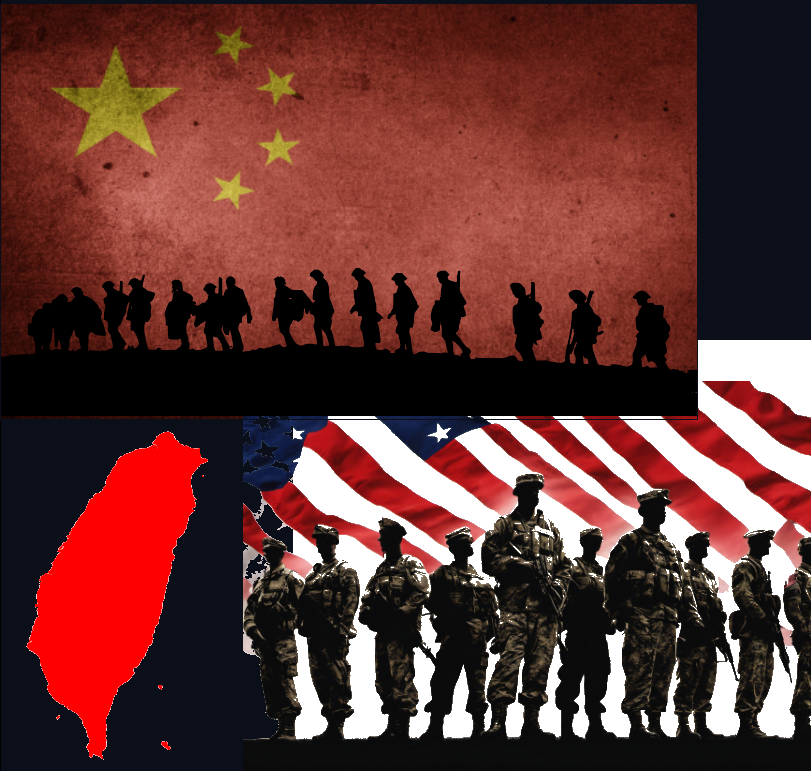
Navigating Cross-Strait Escalation
Why Your Balance Sheet Requires an Indo-Pacific Stress-Test
Shifting Realities in the Indo-Pacific
Many Australian businesses still treat cross-strait tension as a distant headline risk rather than a balance-sheet event. Yet a material escalation involving China and Taiwan can compress export demand, disrupt maritime corridors, and stress working-capital cycles long before traditional credit metrics move. The blindspot is not whether disruption is possible, but how quickly trade, logistics, and clearing channels would reprice once the scenario turns operational.
The Core Objective of This Diagnostic Engine
This matrix is designed to translate macro geopolitical shock into company-specific exposure signals. By combining sector baselines with your export and import dependency, shipping-route assumptions, and SWIFT or USD-clearing reliance, the engine isolates how trade volumes, input nodes, maritime bottlenecks, and financial controls may transmit risk under escalating Indo-Pacific scenarios.
Map Your Structural Baseline
Use the industry selector, scenario overlay, sliders, and operational toggles below to stress-test your current structure against limited friction, blockade-style constraints, or full-scale escalation. The objective is boardroom clarity: raise corporate awareness of hidden concentrations, challenge comfortable assumptions, and build a more defensible operational and financing posture before volatility becomes unavoidable.
Operational Parameters
Custom Company Modifiers
Calculated Exposure Score
Risk band guide
Low to Mild (< 2.5) — Lower relative sensitivity under the selected assumptions; still review concentrations and contingencies.
Moderate Elevated (2.5–3.7) — Material transmission channels may stress working capital, inputs or logistics under escalation.
Critical (≥ 3.8) — High modelled exposure across one or more structural channels; prioritise independent review of structure and contingencies.
Owner / legal review flag: The following disclaimer text is retained from the existing site for continuity. It should be reviewed by a qualified legal professional before being treated as final.
Legal Notice & Scenario Context Disclaimer
1. General Intent & Decision-Aid Classification: This standalone “Political Risk - Self Diagnostic Matrix” functions strictly as an analytical decision aid for internal corporate boardroom stress-testing, macro exposure mapping, and conceptual risk discovery. The calculations, scoring distributions (1 to 5), and resultant hazard bands displayed by this engine represent hypothetical scenarios and do not constitute a precise mathematical forecast, definitive investment advice, an underwriting guarantee, or a prediction of localized credit losses.
2. Scenario Fluidity & Complexity Limitation: Geopolitical stability, cross-strait flashpoints, and transnational supply network dependencies represent an exceptionally complex, volatile, fluid, and non-linear field of study. Consequently, this self-diagnostic matrix does not, and cannot, account for all possible tactical operational variables, macro-economic escalation loops, civil emergency mandates, unexpected regulatory shifts, or long-tail systemic outcomes. Actual historical events, should they materialize, will inevitably deviate significantly from the baseline scenarios modeled herein.
3. Australian Jurisdiction & Macro Perspective: The default baseline weightings, impact channels, and scoring parameters embedded within this diagnostic engine are derived exclusively from an Australian macroeconomic perspective and are mapped specifically to the unique sector traits, trading concentrations, and dependency ratios of the Australian domestic economy. Geopolitical risk profiles, transit friction penalties, and vulnerability transmission vectors will vary fundamentally for corporations, assets, or supply architectures domiciled in other national jurisdictions or distinct foreign regulatory zones.
4. Research Grounding & Data Source Disclosures: Modeling variables and sector sensitivities utilize static snapshots extracted from public research frameworks, primarily:
The Australian Strategic Policy Institute (ASPI): Core data concepts are sourced from the benchmark paper “What if…? Economic consequences for Australia of a US–China conflict over Taiwan” and the supplementary “Taiwan Matters” briefs, which outline cross-sector disruption lines, shipping route diversions, labor vulnerabilities, and advanced hardware shortages.
The Department of Foreign Affairs and Trade (DFAT): Bilateral trade composition structures are derived from official Taiwan Relationship and Factsheet datasets, capturing bulk commodity flows (liquefied natural gas, copper, metallurgical coal, iron ore) and technology hardware procurement dependencies.
The Australian Productivity Commission: Methodological risk logic utilizes principles from the “Vulnerable Supply Chains” framework to evaluate input concentration and separate essential vulnerabilities from diversified supply structures.
5. Absolute Limitation of Financial Liability: This platform, its owners, developers, and allied contributors carry absolute and unconditional zero legal or financial liability for any damage, loss, equity contraction, commercial trading disruption, currency clearing freeze, or asset impairment incurred by any corporate entity, sovereign institution, or private individual who uses, references, or relies on these diagnostic metrics to execute capital allocations, operational adjustments, portfolio balancing, supply contract restructuring, trade finance commitments, or any financial decision whatsoever. All commercial actions executed in connection with geopolitical contingencies are taken at the user’s sole, independent risk.